
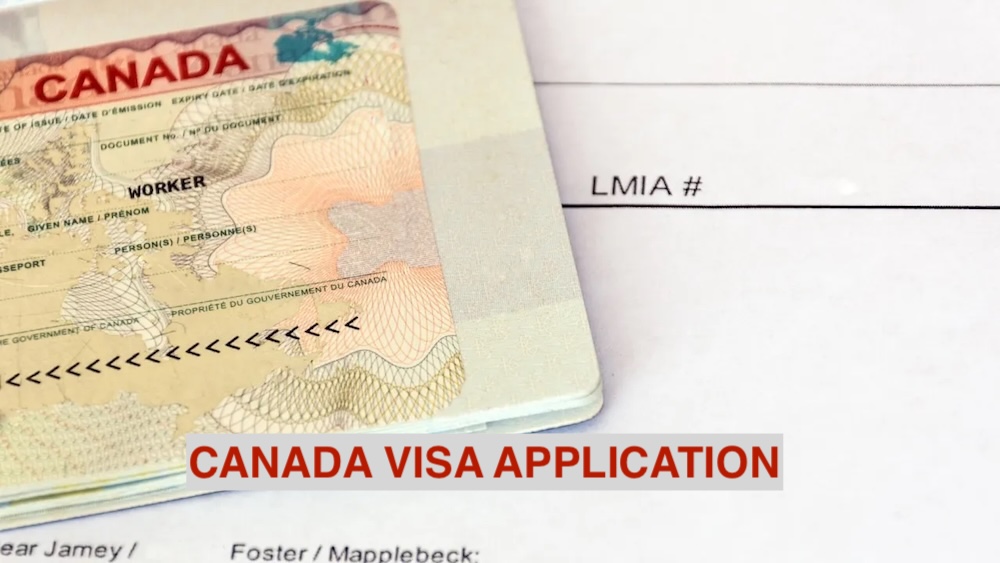
Canada Work Permit Visa 2026 – How to Apply www.canada.ca. Canada remains one of the top destinations for skilled workers seeking temporary employment opportunities. A Canadian work permit authorizes foreign nationals who are not Canadian citizens or permanent residents to work legally in the country for a specific period. In 2026, the system continues to balance labour market needs with efforts to manage temporary resident volumes under the 2026–2028 Immigration Levels Plan.
You can apply for a Canada Job Visa 2026, BD, India, Pakistan, Singapore Canadian Work Permit Visa 2026. If you want to get a work permit visa, then apply online or on paper.
Canada Work Permit Visa 2026 – How to Apply www.canada.ca
Temporary worker arrivals are targeted at approximately 230,000 in 2026 (170,000 under the International Mobility Program and 60,000 under the Temporary Foreign Worker Program), as part of broader goals to reduce the temporary resident population to under 5% of Canada’s total population by the end of 2027.
- Read More: Italy Work Permit Visa 2026
Types of Work Permits
Canadian work permits generally fall into two categories:
1. Employer-Specific Work Permits
These tie the holder to a specific employer, occupation, and location listed on the permit. Changing jobs usually requires a new application.
- Temporary Foreign Worker Program (TFWP): Requires a positive Labour Market Impact Assessment (LMIA) from Employment and Social Development Canada (ESDC)/Service Canada. The LMIA confirms that no Canadian citizen or permanent resident is available for the role and that hiring a foreign worker will not negatively affect the labour market.
- International Mobility Program (IMP): LMIA-exempt. The employer submits an offer of employment through the Employer Portal and pays a compliance fee. Common pathways include free trade agreement professionals (e.g., CUSMA/USMCA), intra-company transfers, significant benefit categories, Francophone Mobility, and others.
Check More: Australia Work Permit Visa 2026
2. Open Work Permits
These allow the holder to work for almost any employer in Canada (with limited restrictions on certain non-compliant employers). No job offer or LMIA is required. Common types include:
- Post-Graduation Work Permit (PGWP) for eligible international graduates
- Bridging Open Work Permits (BOWP) for permanent residence applicants
- Spousal/common-law partner open work permits
- Certain public policy-based permits (e.g., for specific temporary resident to permanent resident pathway applicants, extended in some cases until December 31, 2026)
Some activities are work-permit exempt (e.g., certain short-term business visitors or specific professions under international agreements), but most foreign nationals need a permit to work.
Key Eligibility Requirements
Applicants must generally:
- Have a valid job offer (for employer-specific permits) or meet open-permit criteria
- Prove they will leave Canada at the end of their authorized stay
- Be admissible (no serious criminality, security, or medical issues)
- Hold a valid passport
- Meet any specific program requirements (education, experience, language, etc.)
Employers hiring under the TFWP must meet recruitment, wage, and advertising rules. Low-wage stream rules in 2026 include tighter caps (generally 10% of the workforce in many cases), shorter validity periods in some streams, and restrictions in high-unemployment census metropolitan areas, with exemptions for priority sectors such as healthcare, construction, and food processing.
How to Apply for Canada Work Permit Visa 2026
Anyone can apply before they enter Canada. However, there may be visa office requirements that you need to meet depending on what country or territory you’re applying from. Make sure you follow the instructions for how to apply.
Application Process
From Outside Canada
- Confirm eligibility and gather documents (passport, job offer or LMIA/offer of employment number, proof of qualifications, etc.).
- Create or sign in to an IRCC secure account.
- Complete the online application, upload documents, and pay fees.
- Provide biometrics if required.
- Wait for a decision and, if approved, receive a letter of introduction (or visa if needed) to present at the port of entry.
From Inside Canada
Most applicants already in Canada must apply online for initial permits or extensions. Port-of-entry applications for employer-specific work permits are restricted for most foreign nationals (with limited exemptions, such as certain U.S. citizens or free-trade agreement professionals).
Priority processing is available in some cases, including for certain provincial nominees in specialized healthcare occupations (e.g., specific physician NOCs) with a support letter.
Canada Work Permit Jobs in 2026
Foreign workers can potentially find employment opportunities in a variety of Canadian industries, depending on labour-market conditions and employer demand.
Common sectors associated with foreign-worker recruitment can include:
- Healthcare
- Construction
- Skilled trades
- Agriculture
- Food processing
- Transportation
- Hospitality
- Information technology
- Engineering
- Manufacturing
- Caregiving
- Certain professional services
However, demand varies by province, occupation and employer. A job being available in Canada does not automatically mean that a foreign worker qualifies for a work permit.
Canada Work Permit Salary Requirements
There is no single salary requirement for every Canadian work permit.
The required wage can depend on factors such as:
- Occupation
- Province or territory
- Employer
- Job duties
- Prevailing wage
- LMIA requirements
- Immigration program
For an employer-sponsored application, the wage offered should comply with the applicable Canadian employment and immigration rules.
Can You Bring Your Family to Canada on a Work Permit?
In certain circumstances, a work permit holder’s spouse or common-law partner and dependent children may be able to accompany them to Canada.
However, family members do not automatically receive the same type of status or work authorization.
Eligibility for a spouse or partner’s open work permit can depend on the worker’s occupation, work authorization, immigration program and current Canadian rules.
Family members may also need to satisfy their own admissibility requirements.
Can a Canada Work Permit Lead to Permanent Residence?
A temporary Canadian work permit is not the same as permanent residence, but Canadian work experience can be valuable for some permanent residence pathways.
Depending on the worker’s occupation, language ability, education, Canadian work experience and other factors, possible pathways may include economic immigration programs and provincial nomination programs.
However, holding a work permit does not guarantee permanent residence.
Applicants should plan carefully if their long-term goal is to obtain Canadian permanent residence.
Canada Work Permit 2026: Important Tips
Before applying for a Canada work permit, consider these important points:
Verify the Job Offer
Be careful with employers or agents who promise guaranteed employment in Canada in exchange for large payments.
Check the Employer
Make sure the employer and job offer are genuine before providing money or personal documents.
Use Genuine Documents
Never submit fake employment certificates, educational documents, bank statements or other evidence.
False information or misrepresentation can result in serious immigration consequences.
Understand Your Work Permit Conditions
An employer-specific work permit can restrict you to a particular employer or job. Do not assume that you can freely change employers.
Check Current Rules
Canadian immigration policies can change. Requirements that applied in a previous year may not necessarily apply in 2026.
Fees (2026)
Typical government fees include:
- Work permit processing fee: CAD $155 per person
- Open work permit holder fee: CAD $100 (when applicable)
- Biometrics: CAD $85 per person (or up to $170 for a family applying together)
Employers pay additional costs: approximately $1,000 for an LMIA (TFWP) or $230 employer compliance fee (IMP). Fees are non-refundable in most cases. Some public-policy applicants may be exempt from certain fees.
Processing Times
Times vary significantly by location, stream, and application completeness. As of late 2026 data:
- Outside Canada: often several weeks (e.g., around 4–10 weeks for many major source countries, longer for some).
- Inside Canada (extensions/initial): commonly reported in the 12–16 week range, though service standards target 120 days for in-Canada applications and 60 days for outside.
Always check the official IRCC processing times tool for the most current personalized estimates. Incomplete applications or requests for additional documents can cause delays.
Recent 2026 Developments
- Immigration Levels Plan emphasizes sustainable temporary resident numbers while supporting economic priorities.
- Tighter TFWP parameters to reduce reliance on temporary foreign workers in lower-wage roles.
- Operational updates requiring procedural fairness letters instead of summary refusals in some employer-specific genuineness concerns.
- Temporary public policies allowing certain work permit holders to study short programs (up to 6 months) without a study permit, and extensions for specific open-work-permit pathways.
- Accelerated transition of some temporary workers to permanent residence (targeting up to 33,000 over 2026–2027 for those with strong community ties who have already applied through regional programs).
Tips for a Strong Application
- Apply early—processing can take months.
- Ensure documents are complete, translated if necessary, and match the job offer/LMIA exactly.
- Maintain status if already in Canada (apply to extend before expiry to benefit from maintained status).
- Use official IRCC tools and guides (e.g., Guide 5487 for outside-Canada applications).
- For complex cases, consider consulting a licensed immigration representative.
Important: Immigration rules, fees, processing times, and program details can change. Always verify the latest information directly on the official Immigration, Refugees and Citizenship Canada (IRCC) website (canada.ca) and Employment and Social Development Canada pages before applying. This article provides a general overview based on publicly available information as of early October 2026 and is not legal advice.
Canada Work Permit Visa 2026: Frequently Asked Questions
How much is the Canada work permit fee in 2026?
The standard work permit processing fee is CAD $155. An eligible open work permit applicant generally pays an additional CAD $100 fee, while biometrics may cost CAD $85 per individual when required.
Do I need a job offer for a Canada work permit?
For an employer-specific work permit, a job offer is generally required. An open work permit does not normally require a job offer, but only people who qualify under specific situations can receive one.
Can I get a Canada work permit without LMIA?
Yes, some work permits are LMIA-exempt. However, the applicant must qualify under an applicable LMIA-exempt category.
Can Bangladeshi citizens apply for a Canada work permit?
Yes. Bangladeshi citizens can apply for an eligible Canadian work permit if they meet the requirements of the applicable program.
Is IELTS mandatory for a Canada work permit?
IELTS is not universally mandatory for every Canadian work permit. Language requirements depend on the particular work permit, job, and immigration pathway.
Can I bring my wife and children to Canada on a work permit?
In certain circumstances, eligible family members can accompany a foreign worker. Whether a spouse can obtain an open work permit depends on the applicable rules and the worker’s situation.
Can I get PR after a Canada work permit?
A work permit does not automatically provide permanent residence. However, eligible Canadian work experience may help a worker qualify for certain permanent residence programs.
Final Words
The Canada Work Permit Visa 2026 can provide an opportunity for qualified foreign workers to gain employment and Canadian work experience. The correct pathway depends on whether you have a Canadian job offer, whether your employer needs an LMIA, whether you qualify for an open work permit and whether you meet the requirements of the relevant immigration program.
For most applicants, the first step is to determine whether they need an employer-specific work permit or an open work permit. From there, applicants should prepare genuine documents, satisfy the applicable eligibility requirements, and submit a complete application.
For Bangladeshi applicants, verifying the employer, job offer and immigration pathway is particularly important because fraudulent overseas employment offers can lead to significant financial loss and immigration problems.
Canadian immigration rules can change, so applicants should always check the requirements that apply when they are ready to submit their application.